



Table of Contents Show
Every few months, the internet gets excited about something that doesn’t exist. Sometimes it’s a rumour. Sometimes it’s a leaked mock-up. And sometimes – like with the so-called “Tesla Phone” – it’s a flat-out fake advertisement that spreads faster than common sense. If you’ve seen a glossy video or a too-good-to-be-true poster about Tesla launching a smartphone that will “change everything,” congratulations: you’re one of millions who have witnessed one of the most persistent tech myths of the last few years.
Let’s break down why the Tesla Phone is fake, how the hoax started, why it keeps returning, and what this whole saga says about our relationship with technology and hype culture. My goal here is simple: give you the full picture, straight, clear, and friendly – without any fluff.
1. The Origins of the Tesla Phone Myth
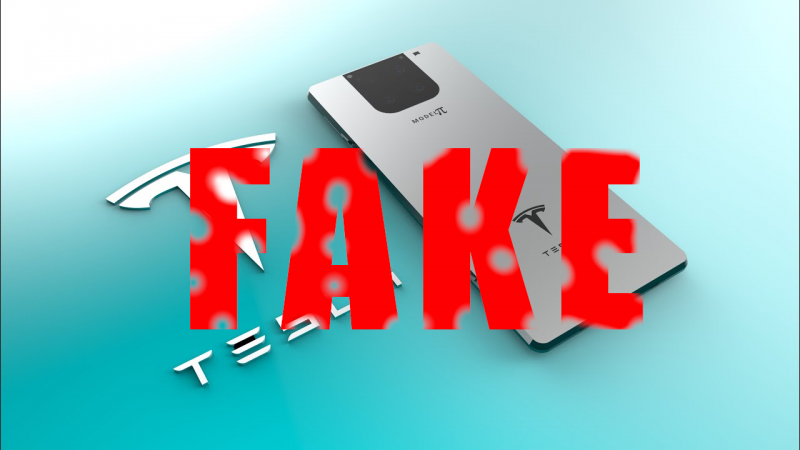
The idea of a Tesla-branded smartphone didn’t come from Elon Musk, Tesla, or any real product roadmap. It came from fan-made concept art and YouTube channels that specialise in “What if?” design videos. These creators – some talented, some opportunistic – put together sleek renders of a fictional “Tesla Model Pi” phone and then packaged them as if they were official.
These videos tend to follow a predictable formula:
- Futuristic-looking hardware renders
- Features that defy today’s engineering
- A deep, dramatic voice reading bullet points
- Zero evidence from Tesla
At first glance, it can feel convincing. People are used to Apple and Samsung secrecy, so tech fans want to believe that a silent giant like Tesla could do something similar. After all, Tesla builds cars, batteries, solar panels, humanoid robots, and space rockets – why not phones?
The answer is simple: because Tesla has never suggested they would.
2. What Tesla Actually Said About Phones
Let’s be absolutely clear: Tesla has made no announcement, no hint, and no roadmap reference to a Tesla smartphone.
The closest Elon Musk has ever come to mentioning a Tesla phone is in a hypothetical scenario he commented on via Twitter/X – saying that if Apple or Google removed Twitter from their app stores, he would consider making an alternative phone. He didn’t say it was being designed. He didn’t say Tesla was involved. And he didn’t say it was real.
That tweet was enough fuel for thousands of “Confirmed! Tesla Phone Coming 2024!” videos.
If Tesla were building a smartphone, shareholders would know. Employees would know. Supply chains would know. And regulatory filings would know. A phone cannot be manufactured in secret – not even close.
3. How the Fake Tesla Phone Advertisement Spread
Fake ads spread in the same way nutritional supplements and get-rich-quick schemes spread: confidence, polish, and vague promises.
Three main drivers keep this myth alive:
A) YouTube Monetisation
Some channels have made millions of views (and thousands of dollars) from Tesla-related speculation. “Tesla Model Pi” became a keyword goldmine. Once one video blew up, dozens of copycats followed.
B) AI-Generated Images
AI image generators like Midjourney and Stable Diffusion can produce stunning phone designs that look indistinguishable from real press renders. Slap a Tesla logo on them and boom – instant “leak.”
C) Tech Website Clickbait
Lower-tier tech blogs reuse the same AI images and recycle the same speculation to capture search traffic. Some even claim “exclusive insider details,” despite having zero evidence.
This cycle creates a self-reinforcing illusion: if everyone is talking about it, it must be real.
But it’s not.
4. Why the Tesla Phone Makes No Business Sense
Even if Tesla wanted to make a phone, it would be a terrible business decision. Here’s why.
A) The Smartphone Market Is Brutally Saturated
Apple and Samsung control most of the global smartphone market. Google, Xiaomi, Huawei, and other giants fight over the scraps. Entering this space is like trying to open a new soft-drink company to compete with Coca-Cola – possible, but extremely expensive and almost guaranteed to fail.
B) Tesla Doesn’t Have Phone Manufacturing Infrastructure
Cars and phones couldn’t be more different in terms of supply chain, materials, and regulatory environments. Tesla would have to:
- Build or contract massive new factories
- Source entirely new components
- Enter a hyper-competitive ecosystem
- Maintain multi-year software update cycles
- Build an app store
That last point alone – creating a viable app ecosystem – has destroyed multiple companies.
C) A Tesla Phone Isn’t Aligned With Tesla’s Mission
Tesla’s mission is to accelerate the world’s transition to sustainable energy. Phones don’t advance that mission at all.
Tesla Energy makes sense. Tesla robots make sense. Tesla charging infrastructure makes sense. A phone? Not even close.
5. The “Impossible Features” That Give the Hoax Away
Fake Tesla Phone ads always include ridiculous features. These are the quickest ways to spot a fake, because they break physics, engineering, and economics.
Here’s a table showing the most common claims versus what’s actually possible:
| Fake Feature | Why It’s Not Realistic |
|---|---|
| Solar charging that powers the phone fully | Solar panels that small couldn’t generate meaningful energy. |
| Starlink satellite connectivity in a phone | Starlink requires large antennas; no smartphone can house them today. |
| Neuralink integration | Neuralink interfaces with the brain, not consumer electronics. |
| Martian communication mode | Mars isn’t exactly 5G-ready. |
| Holographic projections | No modern phone manufacturer has this tech – it’s sci-fi. |
| Built-in crypto mining hardware | The battery would die within minutes and heat up like a stove. |
These features sound cool. They look amazing in concept videos. But not a single one is remotely feasible for commercial release in the next decade.
6. Why People Want to Believe in the Tesla Phone
This part is fascinating. The Tesla Phone myth survives because it fulfills emotional, not technological, needs.
A) Tesla Has a Cult-Like Fanbase
People love Tesla because it challenges what’s normal. A lot of Tesla fans assume that if Tesla can make a car drive itself, they can also make a phone that outperforms Apple. This creates a psychological bias: if you admire the company, your brain wants the rumour to be true.
B) People Are Bored with the Smartphone Market
Let’s face it – phones aren’t that exciting anymore. Each year brings:
- Slightly better cameras
- Slightly faster chips
- Slightly brighter screens
A Tesla Phone represents a fantasy of real innovation.
C) We’re Used to Surprises From Tech Giants
Elon Musk launched a flamethrower as a joke – and people still bought it. So the idea of a surprise phone seems plausible.
D) Misinformation Feels More Exciting Than Reality
A dramatic fake ad grabs attention. A headline saying “No, Tesla Isn’t Making a Phone” doesn’t.
It’s human nature.
7. What the Fake Tesla Phone Says About Tech Hype Culture
The Tesla Phone hoax is a case study in modern tech hype. It proves how:
- Viral content can override truth
- AI imagery blurs the line between fake and real
- People trust well-designed graphics more than official statements
- Tech enthusiasts crave disruption so badly that they’ll create it from thin air
According to research on misinformation dynamics, people prefer information that aligns with their expectations – not necessarily what’s accurate (Wikipedia: Misinformation).
This explains why debunking rarely kills a rumour. The Tesla Phone keeps coming back because people want it to come back.
8. Why Tesla Themselves Never Bothered to Deny It
Here’s an interesting detail: Tesla hasn’t issued a public statement denying the phone’s existence. Why? Because they don’t need to.
If Tesla denied every internet rumour, they would spend more time writing press releases than building cars. Also, denying something gives it attention. Silence makes the rumour die faster.
Except – thanks to AI-generated viral content – the rumour didn’t die this time.
9. The Psychology of Fake Advertisements
Fake ads work because they exploit three psychological vulnerabilities:
A) Authority Bias
A Tesla logo automatically makes something feel official – even if it’s not.
B) Future-Thinking Excitement
Humans love imagining better versions of today’s tech, even if the leap is unrealistic.
C) Social Proof
When millions watch the same video, people assume it must be legitimate.
And that is why the Tesla Phone hoax keeps circling the internet like a rumour that forgot how to die.
10. Actual Tesla Technology That Is Real (and Impressive)
To ground this conversation, let’s look at what Tesla is actually building. These are real, officially announced, verifiable technologies:
| Real Tesla Tech | Status |
|---|---|
| Autopilot & FSD | Actively developed and deployed in millions of cars |
| Tesla Bot (Optimus) | Early prototypes demonstrated |
… And at no point does a phone enter the picture.
Tesla’s public filings, investor communications, and roadmap all support this fact. Tesla remains focused on energy storage, automotive AI, robotics, and grid-scale innovation.
You can verify Tesla’s official product roadmap and announcements directly from their investor resources and SEC filings (Wikipedia: Tesla, Inc.).
No phone. Not even an accidental mention of one.
11. How to Spot Fake Tech Advertisements in the Future
The Tesla Phone won’t be the last time you see a fake ad. Here are some tools you can use to avoid falling for future hoaxes.
A) Check for a Source
If a video doesn’t say where the info came from, assume it’s fiction.
B) Look for Official Press Releases
Real companies love announcing real products. Silence means it’s not real.
C) Check Whether the Features Violate Laws of Physics
Holograms from your pocket? Satellite internet without antennas? Brain-computer interfaces in a smartphone?
Nope.
D) Check the Logo Quality
Most fake ads use stretched or low-resolution logos.
E) Consider the Business Logic
Would producing this product make sense for the company?
If not, it’s likely a hoax.
12. Could Tesla Ever Make a Phone One Day?
Sure, anything is possible. But here is the realistic outlook:
A) If Tesla built a phone, it wouldn’t be called Model Pi.
The name is from a design studio – not Tesla.
B) It wouldn’t have Starlink antennas inside it.
Physics doesn’t bend for rumours.
C) Tesla would need a compelling reason to enter the market.
So far, there isn’t one.
D) Tesla would announce it loudly.
They wouldn’t hide a billion-dollar product.
13. Why the Fake Tesla Phone Persisted Longer Than Most
The Tesla Phone myth lasted unusually long for a hoax. Why?
1. Tesla’s reputation for innovation makes wild claims believable.
2. AI tools make fake designs look convincing.
3. YouTube’s algorithm rewards dramatic speculation.
4. People are desperate for the “next big thing.”
5. The tech community loves imagining Elon Musk disrupting new industries.
This combination created a perfect storm where fiction felt like fact.
14. The Real Consequences of Believing Tech Hoaxes
It’s tempting to treat this as harmless fun – but tech misinformation can have real effects.
A) Consumers Get Misinformed
People delay upgrading their phones because they think a Tesla model is “weeks away.”
B) Scammers Exploit the Hype
Fake pre-orders, fake giveaways, fake “Tesla Pi prototypes” – they’ve all appeared.
C) Investors Make Poor Decisions
Some investors speculate based on false Tesla product rumours.
D) Journalistic Credibility Suffers
When blogs publish fake stories, readers lose trust in those platforms.
E) It Warps Expectations of Real Technology
People start expecting unrealistic leaps every year.
Hoaxes aren’t neutral.
15. What Will Actually Replace Today’s Smartphones?
If the Tesla phone isn’t coming, what is the future?
Here are the actual contenders for “post-smartphone” devices:
| Technology | Description | Status |
|---|---|---|
| AR Glasses | Wearable screens replacing phones | In development by Apple, Samsung, Meta |
| AI Wearables | Pin-style voice assistants | Early-stage products exist |
| Brain–Computer Interfaces | Neural interfaces | Experimental only |
| Holographic Displays | No physical screens | Research stage |
In all cases, Tesla is not involved.
16. Debunking the Most Viral Tesla Phone Claims
Let’s walk through the biggest myths individually.
Myth 1: It connects to Starlink directly.
False. Smartphones aren’t physically capable of using Starlink frequencies.
Myth 2: It charges by sunlight alone.
False. Surface area is too small to generate useful power.
Myth 3: It will replace iPhone and Android.
False. No ecosystem, no app store, no OS.
Myth 4: Tesla leaked the images.
False. Every popular render was created by independent designers.
Myth 5: An insider confirmed it.
False. Not a single Tesla employee, contractor, or supplier has verified the rumour.
In short: every foundation stone of the Tesla Phone story is made of sand.
17. If Tesla Ever Did Launch a Phone – Here’s What It Would Really Look Like
Let’s humour the idea for a moment.
If Tesla truly entered the smartphone market, a realistic feature set might include:
- Deep integration with Tesla vehicles
- AI-based voice control
- A premium, minimalist hardware design
- Strong battery life using Tesla’s energy expertise
- Satellite compatibility via external devices – but not internal antennas
- An OS built on Android for ecosystem compatibility
No Martian mode. No holographic keyboard. No brain-link crypto miner.
Just a solid piece of consumer electronics – not the sci-fi dream the fake ads show.
18. The Bottom Line: The Tesla Phone is a Spectacular Fake
To wrap it up:
- There is no Tesla Phone, officially or unofficially.
- Every advertisement you’ve seen is fan-made or AI-generated.
- The smartphone market doesn’t align with Tesla’s mission.
- The fake features are technologically impossible.
- The rumour persists because it’s emotionally appealing.
Once you understand how tech hype works, the truth is obvious.
The Tesla Phone isn’t a secret.
The Tesla Phone isn’t upcoming.
The Tesla Phone doesn’t exist.
At least – not outside YouTube thumbnails.